Diadumenian – his coins from Deultum
Only two cities issued coins for Diadumenian in the
1 or 2 assaria 2.9-4.9g 17-19 mm
2 or 3 assaria 7.0-9.0g 23-25 mm
However, examples at 6g and 21mm also exist, so the distinction between the denominations (assuming there is one) is not clear from this type of analysis alone. A trawl of the available literature indicates that there are some 33 main reverse types known for Diadumenian at this mint, of which the majority will be discussed here.
Deultum was a Roman colony, founded by Vespasian and
populated with retired troops – close to the modern town of
As a colony it had no history of Greek culture and hence all the legends on the coins are in Latin. All the reverse legends are either C F D L, or COL FL PAC DEVLT, both standing for Colonia Flavia Pacensis Deultum (The peaceful Flavian colony of Deultum). Coins bearing the C F D L reverse inscription invariably fall into the small denomination category and the distinction between the two reverse legends seems to provide a good basis for denomination distinction.
The following discussion splits the available examples into the two sizes with the smaller being examined first.
Example 1
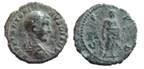
Ob. M OPEL ANTONI-NVS DIADV C
Rev. C F D L
Ref. SNG Bulgaria 222-223;
3.36g, 19mm
Example 1 shows the Aesklepios standing, facing left, with serpent entwined staff reverse type as seen on many provincial coins. In this example he appears to be naked to the waist. The obverse shows a bare-headed and draped bust right - seen from behind. The obverse ‘age’ of Diadumenian being similar to that portrayed at the prolific mints of Moesia Inferior, showing a reasonably mature figure, not as grown as those from say the mints in Cibyra, but much more so than coins issued from say Tripolis where he appears very young.
Example 2
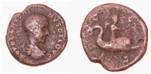
Ob. M OPEL ANTONI-NVS DIADV C
Rev. C F D L
Ref. SNG
Bulgaria 225-229; Varbanov II.
1906;
2.88g, 18mm
Example 2 shows Cupid riding on dolphin facing right, the obverse die being the same as that of Example 1.
Example 3
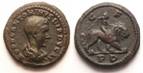
Ob. M OPEL ANTONINVS DIADV CAI
Rev. C F D L
Ref. Moushmov 3568;
4.47g, 19mm
Example 3 portrays Cupid holding goad in right hand, riding lion, advancing right with right foot forward. The obverse die has a continuous legend rather than the break exhibited in the previous two but also shows the bust ‘seen from behind’.
Cupid seems an odd reverse type to be used in a town housing ex-soldiers, but undoubtedly the authorities wished the town to grow in a peaceful environment.
Example 4
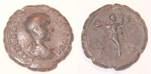
Ob. M OPEL ANTONI-NVS DIADV C
Rev. C F D L
Ref. Yurukova,
Deultum 70; SNG Bulgaria 232-235
4.49g, 19mm
Example 4 shows yet another use of the obverse die seen in Examples 1 and 2. The reverse shows Satir Marsia right, naked, with wine vessel in left hand and raising right arm.
Example 5
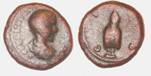
Ob. M OPEL ANTONI-[NVS DIADV C]
Rev. C F D L
Ref. Yurukova,
Deultum 86; SNG Bulgaria 237-240
4.93g, 18mm
Example 5 shows Telephorus standing wrapped in long hooded
cloak. Telephorus is the dwarf companion
of Hygieia, usually depicted with a cowl on his head, (though occasionally
wears a Phrygian cap) who was a symbol or minor god of recovery. According to
some myths he was the brother of Hygieia and was a popular deity in
Example 6
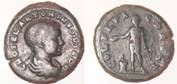
Ob. C M OPEL ANTONINVS DIADV
Rev. COL FL PA-C DEVLT
Ref. SNG
Cop. 6. No. 537; SNG Bulgaria
150-151;
8.74g, 24mm
Example 6 shows Apollo standing left holding branch in right hand and in left, a patera over flaming altar. This is a typical reverse type for coins of the region. Apollo was an important god, regularly depicted on the reverses of both imperial and provincial coins. The distinction between Apollo and Bonus Eventus is not always clear, both sharing similar attributes and coins of this type are also attributed to that deity. The coin is noticeably larger than the preceding examples and must have represented a different denomination.
Example 7
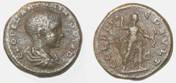
Ob. C M OPEL ANTONINVS DIADV
Rev. COL FL PAC DEVLT
Ref. SNG Cop. Vol.6, 536; SNG
Bulgaria 162
7.27g, 23mm
Another deity that was extremely popular on the reverses of
coins from
Example 8
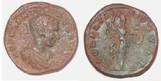
Ob. M OPEL ANTONINVS DIADV C
Rev. COL FL PA-C DEVLT
Ref. SNG Cop. Vol.6, 536; SNG
Bulgaria 189;
7.27g, 23mm
Utilising a different obverse die from the previous 2 coins,
this example shows Athena, helmeted, standing holding spear and shield in left
hand and resting on an olive tree-trunk with right hand, a coiling serpent (Erichthonios) around it.
Athena was one of the twelve main gods of ancient
Example 9
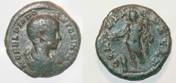
Ob. M OPEL DIADO ANTONIN[VS C ]
Rev. COL FL PA-C DEVLT
Ref. SNG Bulgaria 175-177
7.30g, 23mm
Example 9 shows Concordia, standing holding cornucopia in left arm and offering patera over lit altar with right hand. Concordia or her Greek counterpart Homonia, are also common reverse types seen on Roman Provincial coins. The obverse die is unusual in that it names Diadumenian before Antonius in the legend.
Example 10

Ob.
C M
OPEL ANTONINVS DIADV
Rev. COL FL PA-C DEVLT
Ref. SNG Bulgaria
8.98g, 25mm
Example 10 also shows Concordia, this time seated and holding a patera in her right hand and a cornucopia in her left arm. The image is a familiar one to those seen in Imperial coinage but the seated deity is less often seen in the various issues from the provincial issuing cities.
Example 11
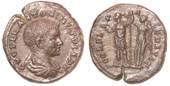
Ob. C M OPEL ANTONINVS DIADV
Rev. COL FL P-A-C DEVLT
Ref. SNG Bulgaria 166-169;
Jurukova, Deultum, no. 77, pl. 7; Varbanov (Eng) Vol.II
2175
7.30g, 23mm
The reverse of this coin (Example 11) shows Diadumenian in military dress, standing left holding a thunderbolt in right hand and spear in left hand, behind – Victory is placing a wreath on his head with her right hand and holding a long palm in her left hand. The object Diadumenian is holding has previously, been identified as a parazonium or a scroll, but this example clearly shows it as a thunderbolt. This is likely to be Diadumenian on the reverse rather than Macrinus, as the scene is similar to a reverse type used when Geta was elevated to the purple – so it is likely to commemorate Diadumenians investiture as Caesar. The obverse die is an excellent representation of Diadumenian and is possibly the most accomplished engraving of the series, being the same as Examples 6 and 7.
Example 12
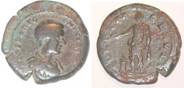
Ob. M OPEL ANTO-NINV[S DIAD C]
Rev. COL FL PA-C DEVLT
Ref. SNG Cop. Vol.6, 537; SNG
Bulgaria 163-165;
7.30g, 23mm
The deity on the reverse of Example 12 is not fully explained but is likely to be a depiction of the Emperor, holding aside his drapery with his left hand while holding a patera over a lit altar with his right.
Example 13
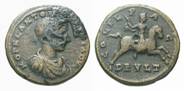
Ob. M OPEL ANTONINVS [DIADV ]
Rev. COL FL PA-C DEVLT
Ref. SNG Bulgaria 170-172;
7.64g, 23mm
This particular example shows a strange corrosion on the obverse – on what would have been an otherwise excellent specimen. The reverse depicts Macrinus on horseback, right, cape flying behind and holding aloft in right hand a spear. Obviously a military type of reverse appealing to the local population the styling is excellent with the reverse design filling the flan. The obverse matches that of Example 8.
Example 14
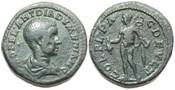
Ob.
M
OPEL ANT DIADVMENIANVS
Rev. COL FL PA-C DEVLT
Ref. SNG Bulgaria; courtesy of
Barry Murphy sales
8.34g, 25mm
Example 14 shows Hermes, the herald of the gods, on the reverse. Another popular deity to depict on the reverse of coins of this time he is shown holding the caduceus (kerykeion in Greek) in his left arm and a purse in his right hand. While he can be portrayed with winged boots, a winged travellers cap and/or a chlamys cloak it is the caduceus (originally a heralds staff) which is often most recognisable.
Example 15
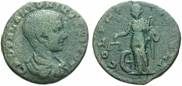
Ob. C M OPEL ANTONINVS [DIADV ]
Rev. COL FL PA[-C
DEV]LT
Ref. CNG 147 No. 76
(illustrated with permission);
8.56g, 23mm
Example 15 shows the reverse commonly knows as Nemesis- Aequitas. Here she is holding a set of scales in her right hand and a measuring rod in her left. A wheel is at her feet. Sometimes the measuring rod is replaced by a cornucopia. This deity combines the attributes of both Nemesis and Aequitas to create an all-encompassing one relaying how the Emperor brings (and maintains) justice in the city and watches over the commercial transactions to ensure fair play.
Example 16
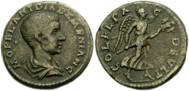
Ob. M OPEL ANT DIADVMENIAN C
Rev. COL FL PA-C DEVLT
Ref. CNG 108 No. 34
(illustrated with permission); Lindgren III 777a; SNG Bulgaria 209-213;
8.56g, 23mm
Example 16 shows Victory (Nike) walking right, holding a long trophy in her hands. Always a popular motif for provincial coinage as well as the imperial series, this coin, like that of the Emperor on horseback, is unlikely to commemorate a particular military campaign but is generically lauding the successes of the military settlers.
Example 17
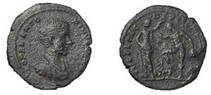
Ob.
M
OPEL ANTO-NINV[S DIAD C]
Rev. COL FL PA-C DEVLT
Ref. AkropolisZ
(illustrated with permission); Varbanov 1893
-g, 25mm
Example 17 is a very rare coin showing Perseus holding head of Medusa in his left hand and unchaining Andromeda with his right; right foot on the body of Medusa. The story of Perseus and Medusa is well know but it is rarely depicted on these type of coins and particularly on one with so small a flan. Usually these types of scenes are reserved for the large and impressive coins, where space allows the engraver to do justice to the scene. The obverse die is the same as Example 12.
Example 18
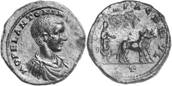
Ob.
M
OPEL ANTONI[NVS DIADV ]
Rev. COL FL PAC DEVL/T
Ref. Gorny
& Mosch Giessener Münzhandlung, Auction 142, October 10th, 2005,
7.83g, -mm
The priest standing behind two oxen ploughing right is a common reverse type in the provincial series, showing as it does the founding of the city ceremony that is performed. In the Diadumenian from Deultum series it is a much less common coin however. The obverse shares a die with Examples 8 and 13.
Example 19
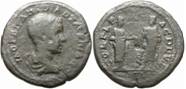
Ob.
M
OPEL ANT DIADVMENIAN C
Rev. COL FL P-AC DEVL/T
Ref. Jurukova 64; SNG Bulgaria
198-206; SNG Hunterian 921
7.39g, 22mm
Continuing with the theme of healing and good health so often found on these coins, Example 19 shows both Salus (Hygieia) on left facing right holding snake and Asklepios (Aesklepios) on right facing left and holding his serpent entwined staff. While not particularly noticeable on this example it can often be seen how the staff is depicted as a crutch with the top resting under the god’s armpit. Devotions to these two deities, (father and daughter) was undoubtedly intermingled in the city with Telephorus also represented in the coin series.
Example 20 Example
21
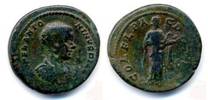
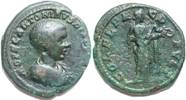
Ob.
M
OPEL ANTO-NINV[S DIAD C] Ob.
M OPEL ANTONINVS DIADV
Rev. COL FL PA-C DEVLT
Ref. e-bay sales August 2006;
2007; Ref.
Courtesy of Barry Murphy sales
7.93g, 25mm 7.53g,
22mm
Example 20 shows the deity Salus (Hygieia) on her own – holding her left hand out with a patera and allowing the snake carried in her right hand to feed from it. While Asclepius was seen as the god of healing, Salus was thought of more in prevention of illness in the first place. This is the standard depiction for this goddess, though the imperial series often depict her seated. The obverse die is shared with Examples 16 and 12. Example 21 shows the same reverse paired with a different obverse die.
Example 22
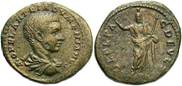
Ob.
M
OPEL ANT DIADVMENIANVS
Rev. COL FL PA-C DEVLT
Ref. Private collection (
8.10g, 25mm
This example shows Serapis standing facing, wearing modius, holding sceptre, right hand raised. The Hellenistic-Egyptian god was another favorite reverse type among the near eastern provincial cities. Derived as a mix of the Egyptian gods Aphis and Osiris, he the imagery projected plenty, security and fertility.
Example 23
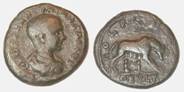
Ob.
C M
OPEL ANTONINVS DIADV
Rev. COL FL PA-C DEVLT
Ref. Moushmov 3566; SNG
Bulgaria 214-221; Jurukova 73, 78
8.21g, 24mm
This reverse scene (She-wolf suckling Remus and
Example 24
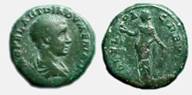
Ob.
M
OPEL ANTONINVS DIADV C
Rev. COL FL PA-C DEVLT
Ref. SNG Bulgaria 174;
Jurukova 66, ebay sales 2007
-g, 24mm
This example shows Tyche standing left, holding rudder in left hand and globe in extended right hand. The depiction is slightly different from that seen at other mints where the rudder is in the right hand. The symbolism represents good luck to the emperor (and Caesar) where the globe shows how the rulers have the world in their hands and the rudder is symbolic of their ability to steer their way successfully.
Example 25
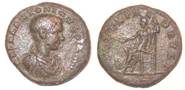
Ob.
M
OPEL ANTONINVS DIADV
Rev. COL FL PAC DEVLT
Ref. Jurakova
67.1 variety, Moushmov 3569; SNG Bulgaria 179;
7.35g, 23mm
The last example shows Zeus enthroned, facing left, holding, patera and sceptre, eagle at feet. The obverse die matches that of Examples 8, 13 and 17. This reverse is common across the Roman world, Zeus representing the most powerful of the gods.
A number of other reverse types can be found associated with this ruler from this mint which have not been illustrated. A founding ceremony with the priests ploughing reverse type can be found for the small (1) assarion coin with the usual C F P D only reverse, the obverse die being the same as Example 1 (SNG Bul. 236). A Satir Marsia reverse type for the (2) assaria coin (SNG Bul. 180) is also found the obverse being the same as Example 11 (the obverse with the most reverse combinations). Both the priest ploughing and the Satir Marsia reverse types appear to have been the only types to be represented on both large and small flan sizes.
The most common Example 11 obverse die can also be found linked to a Hercules (Herakles in Greek) standing, holding lionskin over left arm and resting club on the ground with his right hand (SNG Bul. 178) and a Nemesis-Aequitas reverse type with cornucopia in left arm, holding scales in right hand and wheel at feet (SNG Bul. 192). A second Athena standing beside serpent entwined tree die is also noted (SNG Bul. 188).
The obverse die of Example 12 is also found linked to a Fortuna (may also be described Tyche, though there is no modius evident) reverse type with Fortuna holding a cornucopia in her left arm and a rudder in her right (SNG Bul. 173).
Finally the obverse die of Example 18 is linked to three additional reverse types. The first shows Athena in her more usually encountered stance of standing holding sceptre or spear in her left hand and resting her right hand on a shield (SNG Bul. 191). The second shows Hades seated left holding sceptre in his left and (possibly) a patera in outstretched right hand, Cerberus at his feet (SNG Bul. 193). The final example shows a river god reverse where the god is reclining left his outstretched right hand resting on the prow of a boat (SNG Bul. 194-5).
It must be remembered that this series of coinage did not circulate in isolation but also with that of his father, Macrinus. There would also have been coins from previous emperors also circulating, so the amount of diversification of types in everyday coinage must have been substantial. Distinguishing between denominations seems to be based on the brevity of the reverse legend but that still suggests that each coin would have to be individually examined when conducting everyday commerce.
Malcolm Megaw
August 2007
References.
Preliminary
technical assessment of the architectural and archaeological heritage in
Archaeological
Reserve; Deultum-Develt;
SNG Bulgaria; Vol.
1: Deultum. 2,010 Roman Provincial coins of the Roman colony of Deultum in
Moushmov N.
A. Ancient Coins of the